Time
Online calculator — enter the values and get the result instantly, with the formula and a worked example.
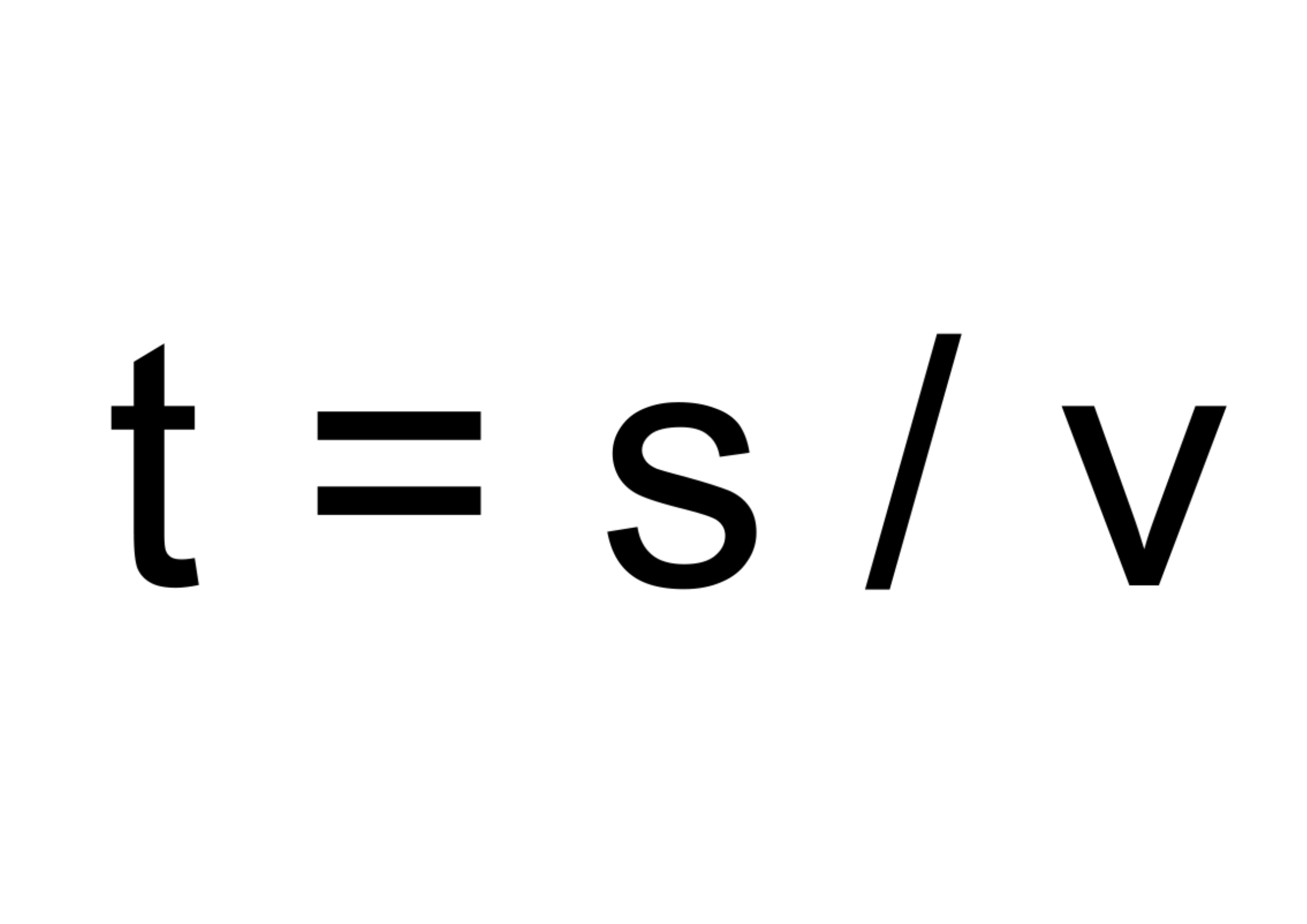
t = Time
s = Distance
v = Velocity
Time in the context of motion is the duration an object spends travelling, and it links how far something goes with how quickly it moves. When an object keeps a steady speed, the time it takes grows in direct proportion to the distance and shrinks as the speed rises, so covering twice the distance takes twice as long, while doubling the speed halves the journey.
In physics, time is a fundamental quantity whose SI unit is the second, and in everyday life it is what we read from clocks, stopwatches, and countdowns. We rely on this relationship constantly, whether estimating a car trip's arrival, planning a train schedule, timing a run, or working out how long light or sound needs to reach us. Understanding it turns a known distance and pace into a reliable prediction of when you will get there.
Time t
–
| Time t in seconds and hours | – |
Magic triangle: cover the one you are solving for — the rest is the formula
Solve it step by step — the next step unlocks only after a correct answer. You can type decimals with a dot or a comma.
